
 Boltex®Fasteners
A roofing system is expected to handle rain, wind, heat, and changing weather conditions for years. While the quality of the roofing sheet is important, the fasteners used to install it are equally critical. A good sheet can still develop problems when the wrong screws are used or when the fasteners are not suited to the supporting structure.
The right roofing sheet screws provide a secure connection between the sheet and the structure while helping protect the fastening point from moisture and corrosion. For metal roofing, factors such as steel thickness, screw length, drill point, thread design, coating and washer type all need to be considered before selecting a fastener.
At Boltex® Fasteners, we work with different roofing and metal-to-metal fastening requirements. Our range includes AS3566-2002 Class 3 standards self-drilling screws for roofing and cladding, stitching screws, crest fixing fasteners, sandwich panel fasteners, and solutions for heavier steel sections. This allows us to look at the application first and then select a fastening solution that fits the requirement.
Importance of Roofing Sheet Screws in Roof Installation
Roofing sheet screws may be small compared with the sheets and structural members they connect, but they carry an important responsibility. They keep the sheets in position, secure overlaps and maintain the connection between the roofing material and its supporting structure.
Choosing a screw simply because it fits the sheet is not enough. The screw also needs to work properly with the material underneath it.
Secure Sheet Fixing
The basic purpose of a roofing sheet screw is to provide a reliable fixing metal to steel screw between the roofing sheet and its support.
For metal roofing self-drilling screws, the screw needs to drill through the sheet and engage properly with the supporting steel. Its diameter, length and thread should be suitable for the thickness of the materials being joined.
At Boltex® Fasteners, our metal-to-metal fastening solutions cover applications ranging from sheet stitching and roofing to heavier steel sections. For heavier applications, our fasteners with a #5 drill point are designed to penetrate steel sections up to 13 mm without pre-drilling, subject to the relevant application requirements.
Protecting Against Water
A screw creates a small opening in the roofing sheet, so sealing around that opening is important. A suitable hex washer head helps close the gap between the screw head and the sheet.
EPDM washers are commonly used for roofing because of their sealing and weather-resistant properties. Correct installation is important here. If a washer is not compressed sufficiently, the seal may not be effective. If it is tightened too much, the hex washer head or roofing sheet can be damaged.
For applications where greater load distribution and sealing are required, we also have our High Wind Roofing Washer System, which combines aluminium with an EPDM hex washer head.
Long-Term Protection
Roofing fasteners remain exposed to the same environment as the roof itself. Moisture, humidity, coastal air and industrial conditions can gradually affect an unprotected fastener.
This is why corrosion protection should be considered at the time of selection rather than after installation. At Boltex® Fasteners, we work with different coating systems, including AS3566-2002 Class 3 and Class 4 standards, BX® and BN3, according to the intended application and environmental conditions.
Our BN3 Series screws are regularly submitted to SGS for salt spray testing of 1,000 hours and Kesternich testing for 15 cycles. These tests help assess corrosion resistance under specified test conditions. The applicable product specifications and test requirements should be checked when selecting fasteners for a particular environment.
How Quality Roofing Screws Improve Roof Performance
Roofing self-drilling screws are not just threaded pieces of metal. The design of the point, thread, head, and coating can affect both installation and service performance.
Better Grip
The thread needs to engage properly with the supporting material. Using the right thread design helps achieve a secure connection without compromising the substrate.
Our range includes full-thread and double-thread self-drilling screws for different metal-to-metal applications. The choice depends on the material, thickness and fastening requirement.
Efficient Drilling
The drill point has a direct effect on installation. When the point is matched to the material, the screw can penetrate the sheet and supporting steel more effectively.
Our Dual-Edge® drill point is used for roofing and cladding applications. For thicker steel, we use a #5 drill point designed for heavier sections.
This difference matters on large projects, where hundreds or thousands of fasteners may have to be installed. A suitable drill point and the correct driver speed can make installation more consistent and efficient.
Suitable Head Design
A Hex Washer Head provides a practical driving surface and is widely used for metal roofing and construction fasteners.
The head also works with the washer to provide the required seating and sealing arrangement. The screw should be tightened according to the manufacturer's installation guidance to avoid damaging the washer or roofing sheet.
Materials and Features of High-Quality Roofing Screws
There are several things to check before purchasing Roofing Sheet Screws. Size is only one part of the decision.
Corrosion-Resistant Coatings
The coating needs to suit the environment in which the fastener will be used.
A roofing project in a normal inland environment may have different requirements from one located near the coast or in an industrial area. Higher levels of corrosion protection may be required in more aggressive conditions.
Our BX® and BN3 coating systems are used for different application requirements. Corrosion-related testing on applicable products helps assess their performance under specified conditions.
EPDM Sealing Washers
The washer plays an important role in roofing applications. It helps seal the point where the screw passes through the sheet and can also help distribute pressure around the fastening point.
Our High Wind Roofing Washer System uses aluminium and EPDM and is designed for metal and corrugated roofing applications. The system has a total thickness of 2 mm and a specified temperature range of -40°C to +120°C.
AS 3566 Classifications
Roofing projects in Australia may include requirements related to AS3566-2002 Class 3 standards or Class 4 fasteners. References to AS3566-2002 Class 3 standards are still found in specifications and technical discussions.
Class 3 and Class 4 relate to corrosion-resistance requirements within the relevant classification system. The required class should always be checked against the current project specification before ordering fasteners. Product-specific test results and coating specifications should also be reviewed where applicable.
Choosing the Right Roofing Screws for Your Application
There is no single screw that is right for every roof. The selection depends on the roofing sheet, supporting structure, thickness of the steel, fixing location and environmental exposure.
Match the Screw to the Steel
When selecting a Fixing metal to steel screw, first determine the thickness of the steel being drilled.
A screw designed for light-gauge sheet should not automatically be used on heavier steel. The drill point needs to have the required capacity, while the thread must provide suitable engagement with the supporting material.
Our range includes fasteners for different steel thicknesses, from sheet stitching to heavier structural sections.
Consider the Fixing Position
The location of the screw on the roofing profile also matters.
For crest fixing applications, our Crest Fixing Fasteners are available in #12 gauge and lengths ranging from 45 mm to 130 mm. Full-thread and double-thread options are available for different fastening requirements.
Where a project specifies Valley Fixing Fasteners, the screw and washer combination should be selected according to the roofing profile, sheet manufacturer's recommendations and project requirements.
Think About the Environment
The surrounding environment should always form part of the selection process.
Coastal areas, industrial locations and high-moisture environments can expose fasteners to more aggressive conditions. In such cases, the coating and corrosion class need to be considered carefully.
Different Roofing Fasteners for Different Applications
Different parts of a roofing installation can require different fastener designs. Using one screw for every application may not always be the right approach.
Stitching Fasteners
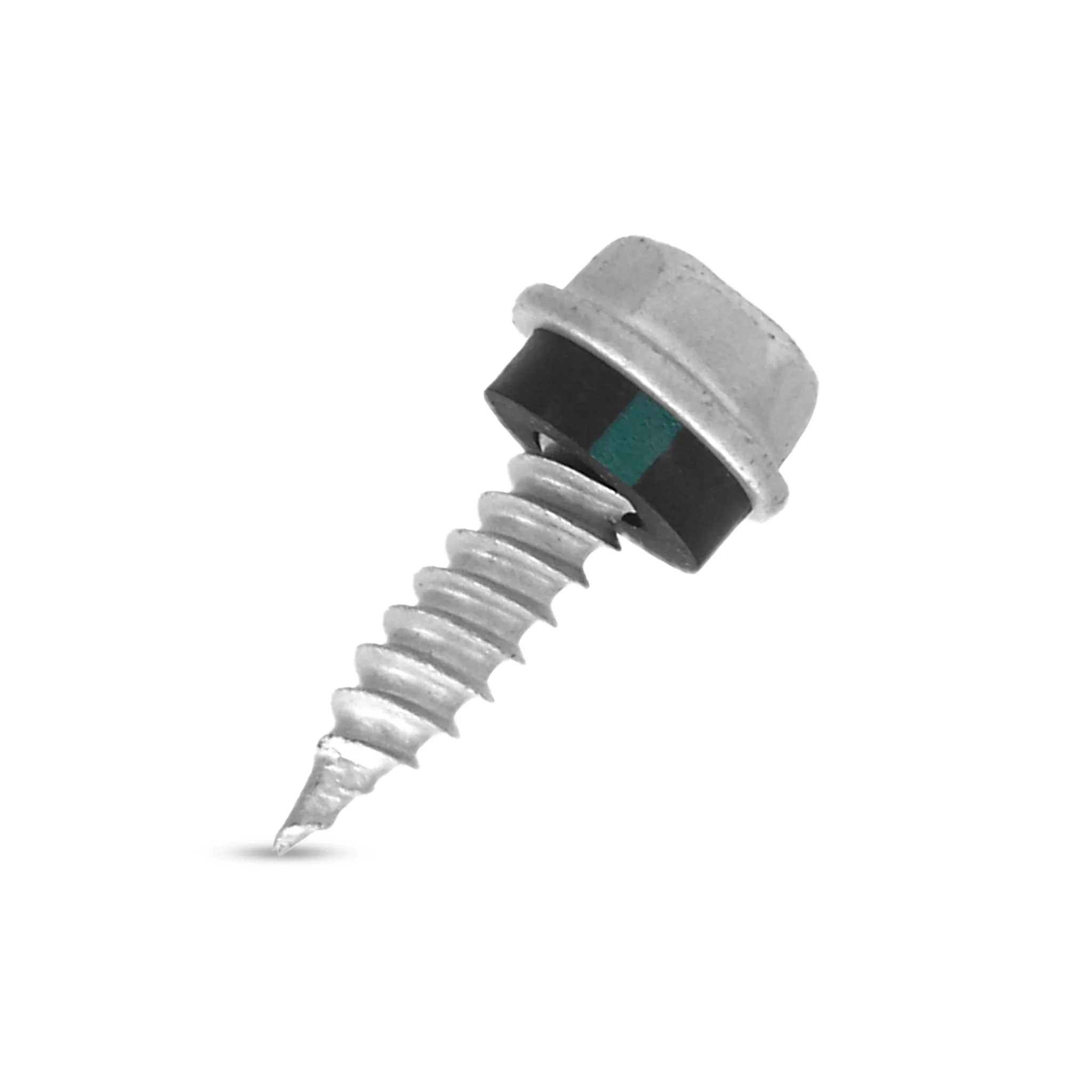
Stitching screws are used for joining overlapping metal sheets, including side laps and end laps.
Our stitching fasteners are available in #10 and #12 gauge sizes and lengths from 16 mm to 35 mm. They use a #3 drill point and are designed for relevant metal-to-metal stitching applications.
Crest Fixing Fasteners
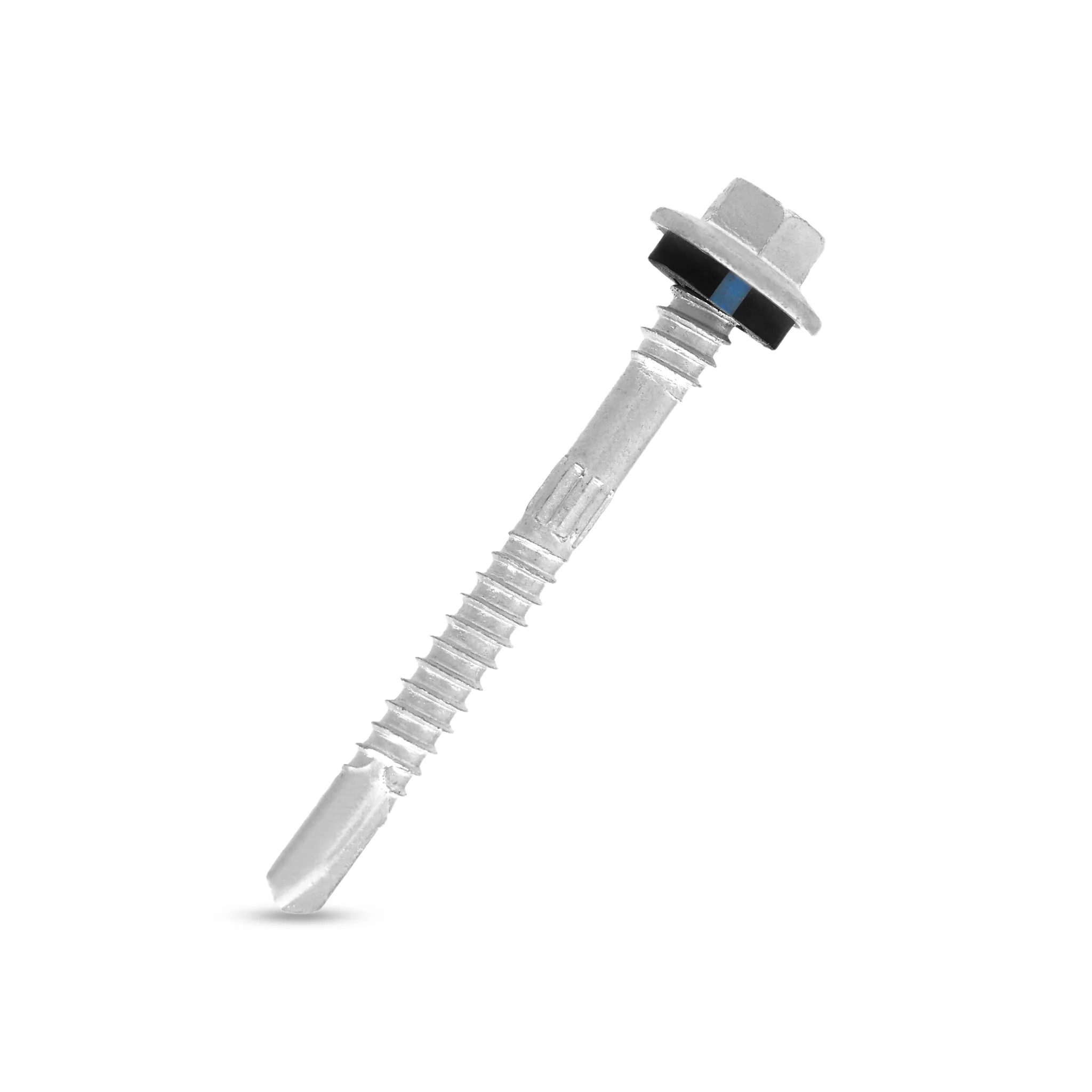
Crest fixing fasteners are used where roofing sheets are fixed through the crest of the profile.
Our Crest Fixing Fasteners are available in #12 gauge and lengths from 45 mm to 130 mm. Depending on the application, customers can select full-thread or double-thread options.
Heavy Section Fasteners
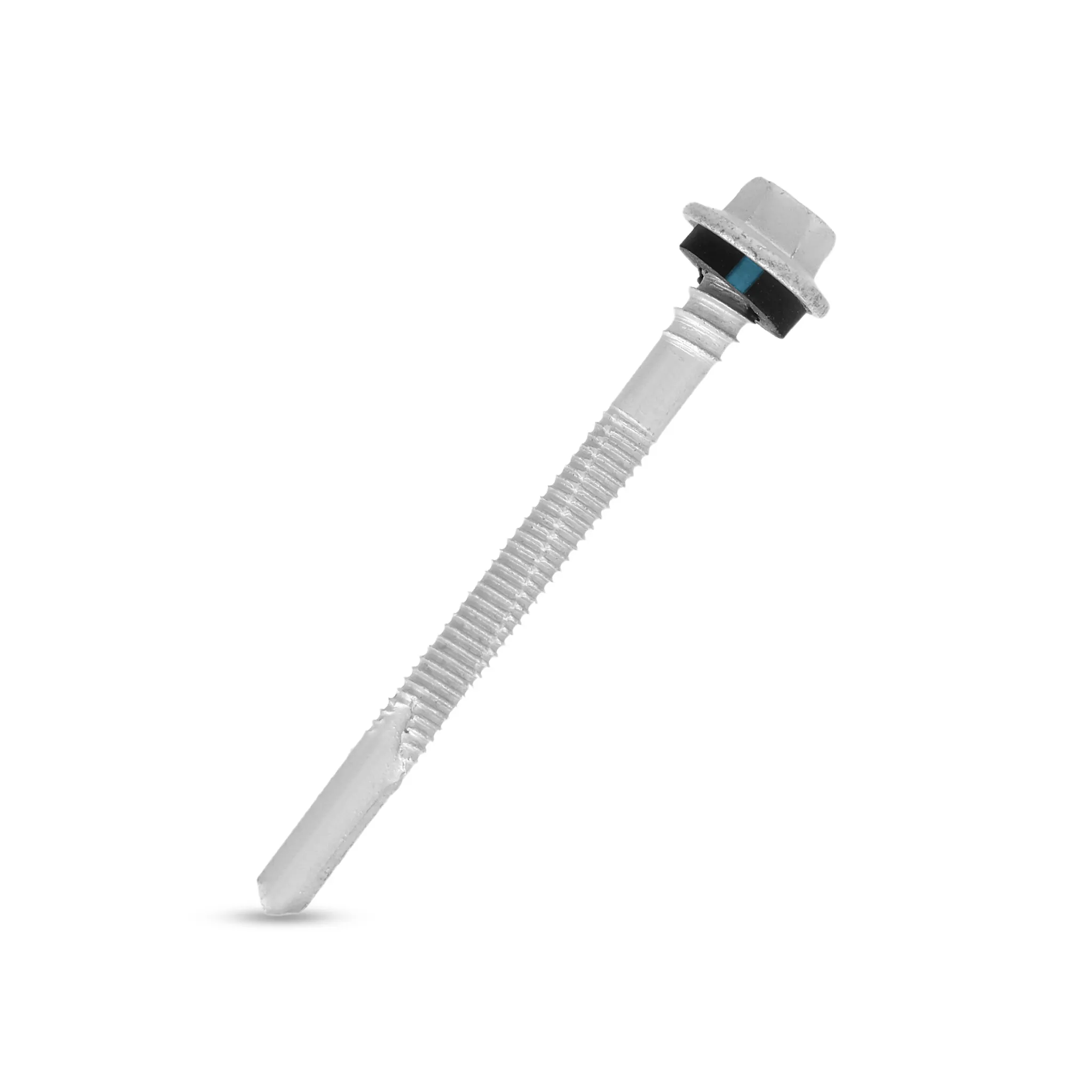
Some projects involve steel that is considerably thicker than standard roofing sheet.
For these applications, our heavy-section fasteners are available in #12 to #14 gauge and use a #5 drill point. They are designed to penetrate steel sections up to 13 mm without pre-drilling for suitable applications.
Sandwich Panel Fasteners
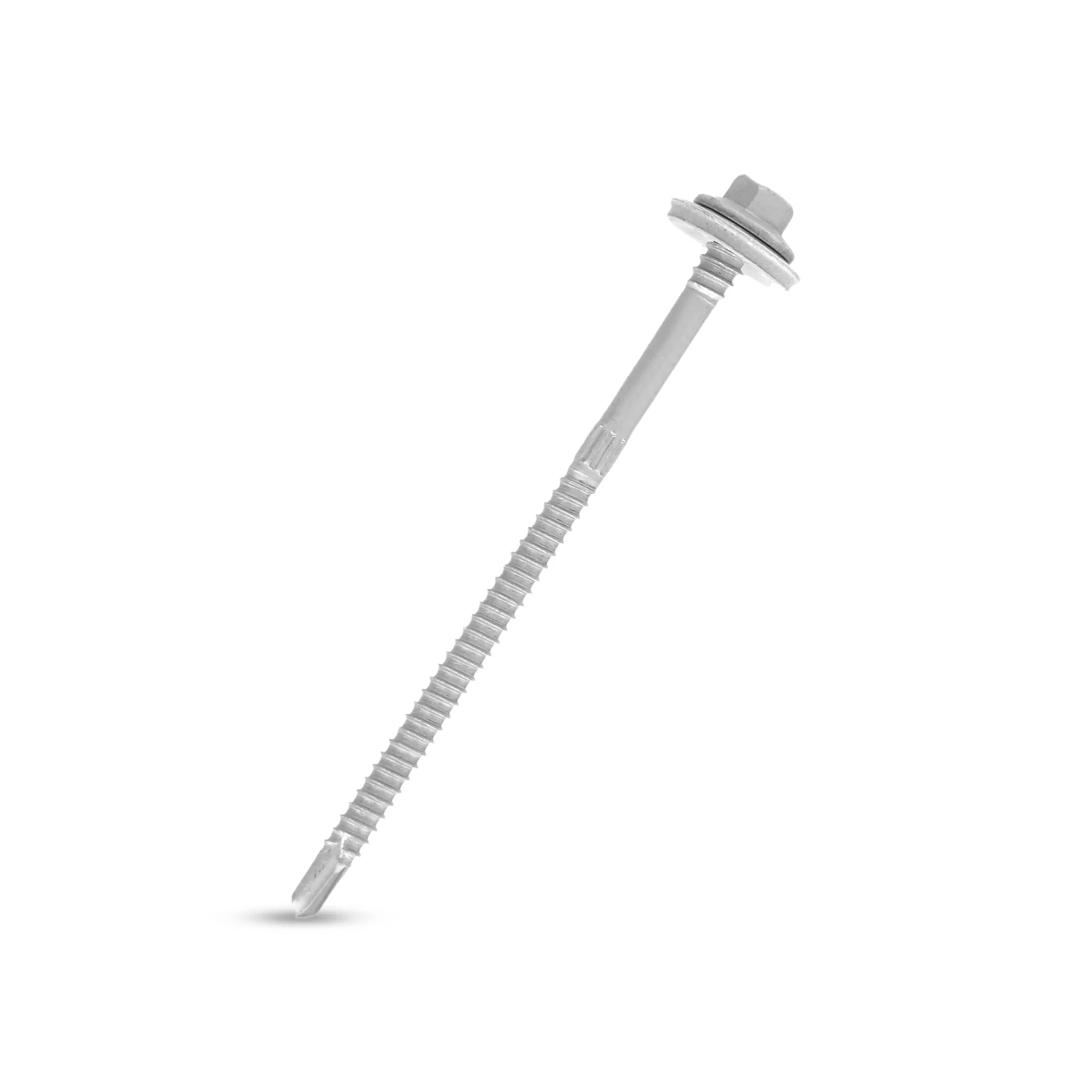
Sandwich and insulated panels require longer fasteners because the screw must pass through the panel before engaging with the supporting structure.
Our range includes longer fasteners for sandwich panel applications, with available lengths depending on the panel thickness and fixing requirement.
Why Quality Testing Matters
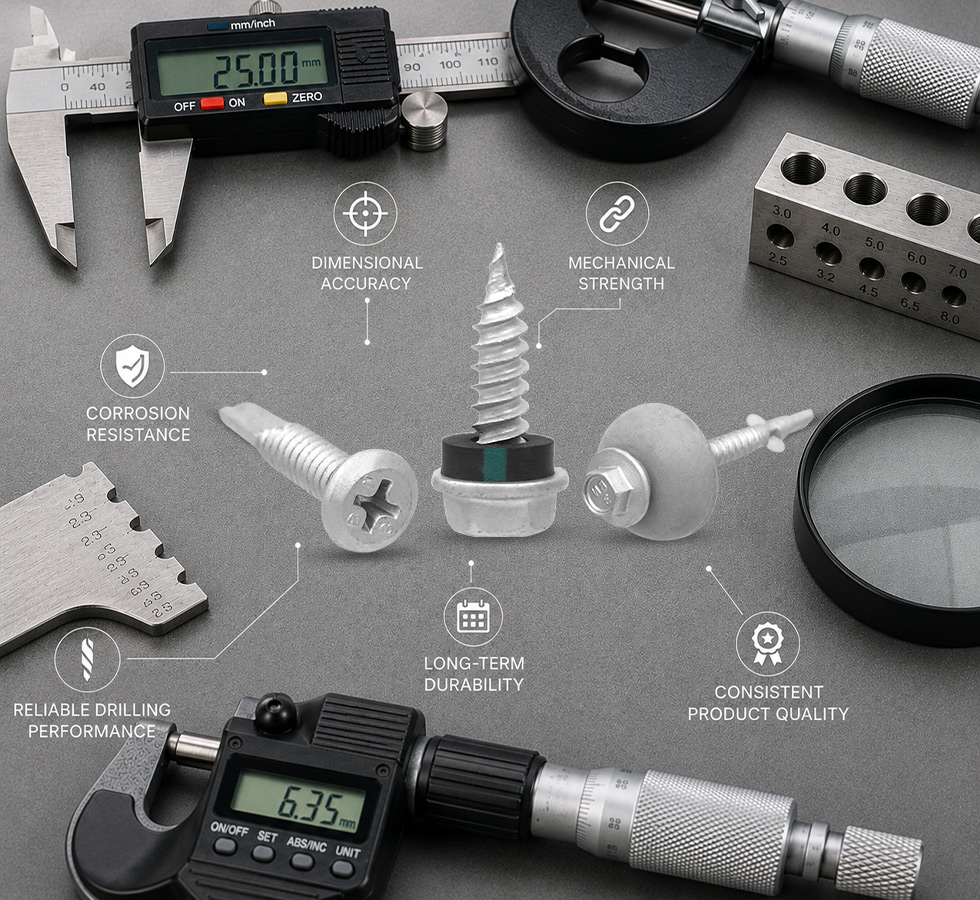
A fastener may look perfectly acceptable, but appearance alone does not tell us how it will perform under load, during drilling or after prolonged exposure.
At Boltex® Fasteners, testing is an important part of our quality process. Depending on the product, our testing covers dimensions, tensile strength, pull-out resistance, shear strength, torque, hardness, drilling performance and coating properties.
We also carry out corrosion-related testing, including salt spray testing for 1,000 hours and Kesternich testing for 15 cycles on applicable products. Our BN3 Series screws are regularly submitted to SGS for these tests. Washer sealing and other application-specific characteristics are also considered where required.
For us, testing is not simply about putting a specification on paper. It helps us understand whether a fastening product is performing as expected for its intended application. Test results and certifications should always be considered in relation to the relevant product and test conditions.
Why Choose Boltex® Fasteners for Roofing Fasteners?
Choosing the right roofing screw fastening solutions provider involves more than selecting a screw from a catalogue. The self-drilling screws for roofing need to suit the roofing sheet, supporting steel, fixing position and site conditions. A small difference in the application can affect the performance of the complete fixing system.
At Boltex® Fasteners, we focus on these application details when developing and supplying roofing fasteners. Our engineering team looks at factors such as base material, steel thickness, environmental exposure, and the type of fixing required before arriving at a suitable solution.
Our capabilities include:
- Application Engineering: We evaluate the fixing requirement and application conditions to help select a suitable fastener.
- Corrosion Engineering: Coating and material selection are considered according to the level of environmental exposure and expected service conditions.
- Custom Solutions: When a standard fastener does not suit a particular application, we can develop solutions around specific project requirements.
- Technical Support: We provide product information and technical documentation to help customers make informed fastening decisions.
- Product Testing: Our fasteners are tested for relevant performance parameters, including drilling performance, tensile strength, pull-out, shear, torque, hardness, coating performance and washer sealing, depending on the application.
For roofing applications, details such as the Hex Washer Head, drill point, thread design, coating and EPDM washer all contribute to how effectively a fastener performs after installation.
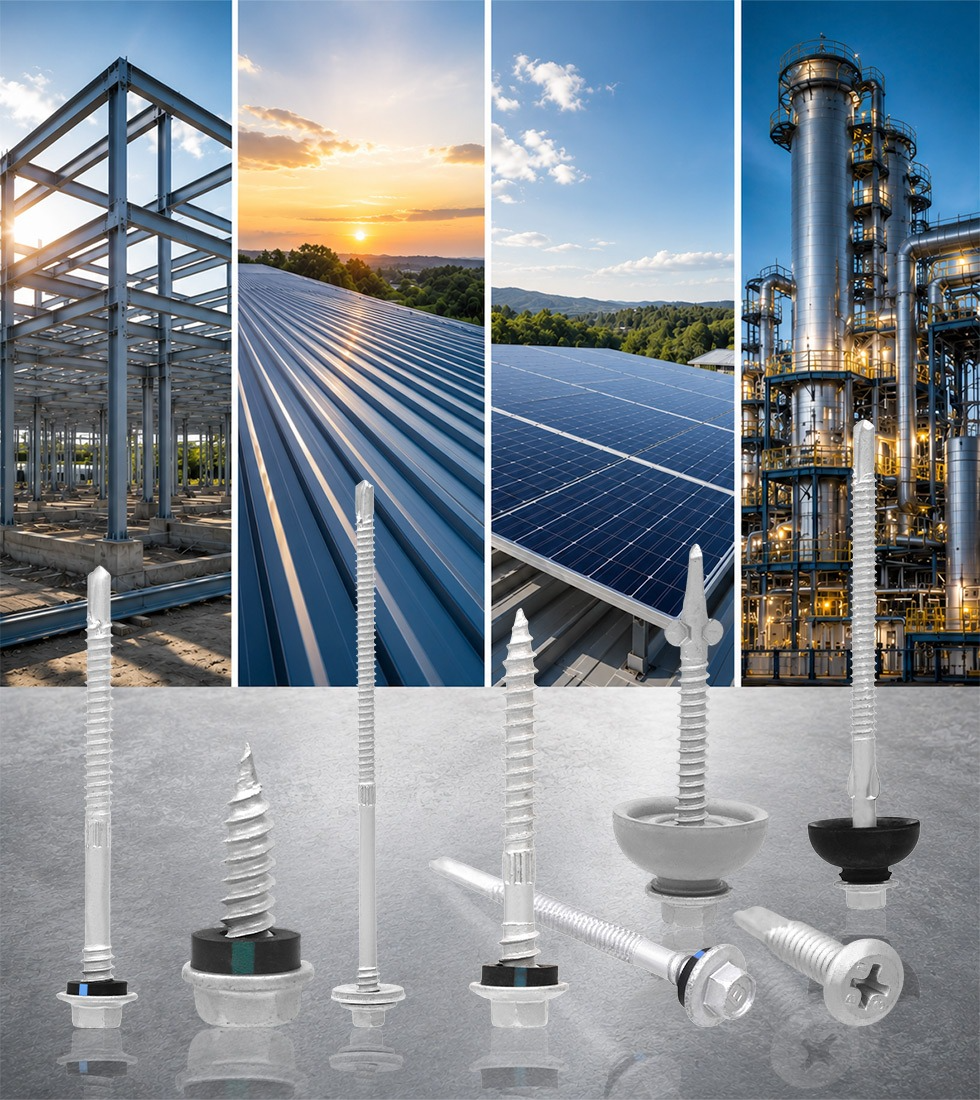
Our metal-to-metal fastening solutions are developed for roofing, cladding, insulated panels, crest fixing, stitching and other steel construction applications. This allows us to look at the fastening requirement from an application perspective rather than treating every roofing project in the same way.
As a reliable roofing screw manufacturer, we start with understanding where and how it will be used. That approach helps contractors, fabricators, EPC companies, distributors, and other customers select fastening solutions that are suited to their specific roofing and metal construction requirements.
Installation Tips for Better Roofing Performance
Even high-quality Self drilling screw for roofing need to be installed correctly.
- Use the right tool: Select a suitable drill driver and bit for the screw head.
- Use the correct RPM: Choose the recommended drill speed according to the screw type, drill point and steel thickness. For example, the recommended speed is 2,500 RPM for standard metal self-drilling screws and 1,800 RPM for Metal SDS-5 Series screws. Follow the roofing screw supplier's guidance and use a suitable drill driver with an appropriate depth gauge and clutch setting.
- Keep the screw aligned: Correct positioning helps the drill point and thread work as intended.
- Avoid over-tightening: Excessive pressure can damage the washer or deform the roofing sheet.
- Check the washer: Make sure it sits correctly against the sheet.
- Follow the fixing pattern: Use the spacing and fixing method specified for the roofing system.
- Inspect the finished roof: Check for loose fasteners, damaged washers or incorrectly positioned screws.
For high-wind applications, washer alignment and consistent tightening become particularly important because the washer needs to distribute pressure effectively across the roofing sheet.
Conclusion
The performance of a roof depends on more than the quality of its sheets. The fasteners holding those sheets in place also need to be selected carefully.
The right Roofing Sheet Screws should match the roofing profile, steel thickness, fixing position and surrounding environment. Drill point, thread design, head type, coating and washer selection all contribute to the final fastening system.
As a leading roofing screw manufacturers, Boltex® Fasteners works across different roofing and metal-to-metal applications, from stitching and crest fixing to sandwich panels and heavier steel sections. We focus on developing self drilling screw for roofing solutions around the application's actual requirements rather than treating every roofing project the same way.
Frequently Asked Questions
Key technical and engineering queries answered for this fastening system.
Boltex®Fasteners
Boltex® Fasteners delivers precision-engineered roofing screws, cyclone washers, and advanced fastening systems trusted across industrial PEB structures and construction projects.
Related Technical Articles
View All GuidesNeed Project-Specific Fastening Assistance?
Our technical application team assists PEB builders, roofing contractors, and solar EPC firms with pull-out calculations, wind-load tests, and customized fastener coating recommendations.