
 Boltex®Fasteners
A screw may look small, but it can be the point holding an entire roofing or cladding system together. Once that fixing is exposed to moisture and changing weather, the quality of its corrosion protection becomes critical.
AS3566 Class 3 Screws are developed for applications where tested corrosion resistance is required along with dependable self-drilling performance. They are commonly specified for suitable roofing, cladding, framing, and construction applications.
What Are AS3566 Class 3 Screws?
AS3566 Class 3 Screws are self-drilling screws tested according to the requirements of AS3566, the Australian Standard for self-drilling screws used in building and construction.
The term itself contains two important parts. AS3566 identifies the standard against which the screw is assessed, while Class 3 roofing screws identifies its corrosion-resistance classification.
Unlike an ordinary self-drilling screw selected only by dimensions, an AS3566 Class 3 screw has a defined performance specification relating to corrosion protection. This makes the classification particularly relevant when fasteners will remain exposed to outdoor conditions.
The screw still needs to be selected according to the material and application. A Class 3 rating does not determine the required diameter, length, drilling point, or washer configuration. Those characteristics depend on the construction system in which the fastener will be installed.
Difference Between AS3566 and Class 3 Screws
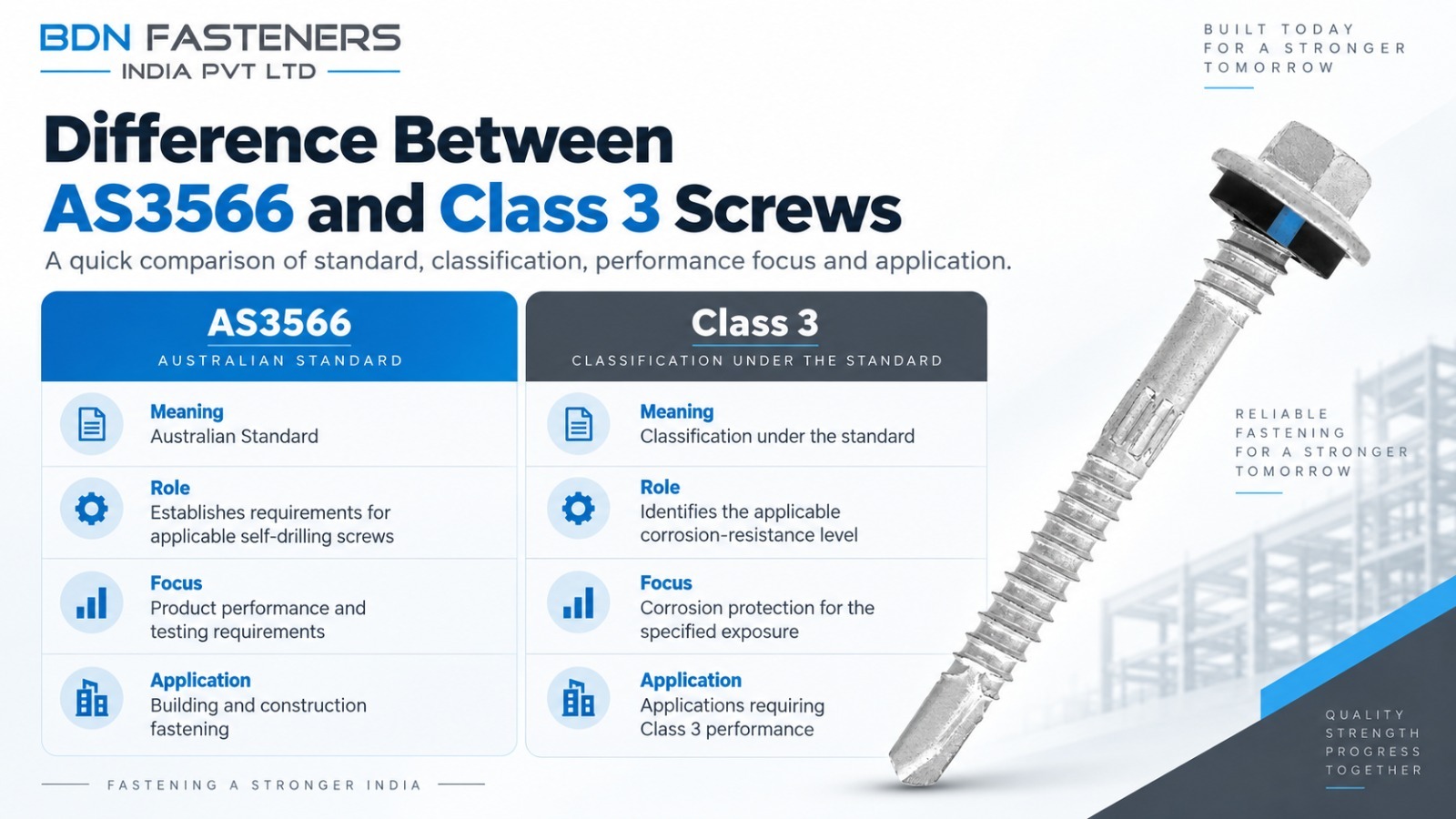
AS3566 and Class 3 roofing screws should not be treated as two different types of screws. They describe different parts of the same specification.
| Factor | AS3566 | Class 3 |
| Meaning | Australian Standard | Classification under the standard |
| Role | Establishes requirements for applicable self-drilling screws | Identifies the applicable corrosion-resistance level |
| Focus | Product performance and testing requirements | Corrosion protection for the specified exposure |
| Application | Building and construction fastening | Applications requiring Class 3 performance |
Why Is Class 3 Testing Important?
Corrosion resistance cannot be judged reliably from the appearance of a screw or the colour of its coating. Testing provides a controlled way to evaluate how the protective system responds to corrosive exposure.
For Class 3 fasteners, salt-spray testing is an important performance benchmark. AS3566 Class 3 Screws are tested for 1,000 hours of salt-spray performance under the applicable testing requirements.
The test places fastener samples in a controlled corrosive environment for the specified duration. Following exposure, the samples are inspected to assess corrosion and the condition of the protective coating.
Salt-Spray Exposure: Creates a controlled corrosive environment for evaluating coating performance.
Coating Resistance: Shows how effectively the protective surface withstands prolonged exposure during testing.
Corrosion Inspection: Samples are examined after exposure for visible corrosion and deterioration.
Test Documentation: Laboratory records provide supporting evidence for the tested performance of the product.
At Boltex® Fasteners, our AS3566 Class 3 roofing screws are tested against the applicable Class 3 requirements, giving buyers a documented basis for specifying the fastener.
Key Features of AS3566 Class 3 Screws Roofing Screws
The corrosion classification is only one part of a screw's performance. Its physical design determines how effectively it can be installed and how well it works with the material being fastened.
Self-Drilling Point: The drilling point allows the screw to penetrate suitable metal sections during installation, eliminating a separate drilling operation in appropriate applications.
Thread Profile: Threads are designed to engage with the supporting material and establish the mechanical grip required for the connection.
Protective Coating: The coating provides the corrosion protection associated with the specified Class 3 performance.
Hex Head: A hexagonal head provides positive engagement with the appropriate driver or socket during installation.
Sealing Washer: Roofing and cladding configurations can incorporate a sealing EPDM washer to help protect the penetration point from water ingress.
Material Compatibility: Different screw configurations can be selected according to whether the connection involves metal, timber, or framing components.
Installation Efficiency: The combination of drilling point and thread reduces installation steps and supports efficient fastening across larger construction areas.
Where Are AS3566 Class 3 Screws Used?
The application of a fastener should be determined by both the construction system and its environmental conditions. Class 3 roofing screws can be used across several building applications when the specified exposure is appropriate.
Roofing
Metal roofing creates thousands of individual fixing points across a building envelope. Suitable Class 3 screws can secure roof sheets to supporting members while their protective coating helps address corrosion at exposed fixing locations.
A sealing washer is generally important in roofing applications because the screw penetration must also remain resistant to water entry.
Wall Cladding
Exterior cladding is continuously exposed to weather. Class 3 screws can be used for suitable metal cladding systems where the environmental conditions correspond to the required classification.
The screw configuration should be selected according to the cladding profile, support material, sheet thickness, and installation requirements.
Steel Framing
Light steel framing and related construction systems require fasteners capable of penetrating and engaging with steel sections. The drilling point and thread design should correspond to the thickness and type of steel being joined.
Metal-to-Wood Connections
Some construction systems combine metal sheets or components with timber supports. For these applications, a suitable metal-to-wood screw configuration should be selected rather than treating every self-drilling screw as interchangeable.
Commercial Structures
Warehouses, industrial sheds, commercial buildings, and similar structures can incorporate Class 3 fasteners where the environmental exposure and fastening requirements are appropriate.
How to Select the Right Screw for Your Application
Choosing the correct fastener starts with understanding the connection itself. Two screws may have the same corrosion classification but still be unsuitable for the same application because their dimensions or point designs differ.
Base Material: Identify whether the screw will join steel to steel, metal to timber, or another material combination.
Material Thickness: Check the thickness of the sheet and supporting member to ensure the drilling point and thread are appropriate.
Screw Length: Select a length that provides the necessary engagement without creating problems on the reverse side of the assembly.
Diameter: The screw diameter should correspond to the connection requirements and manufacturer's recommendations.
Point Type: Different drilling points are designed for different material thicknesses and fastening conditions.
Washer Configuration: Roofing and cladding applications may require a suitable sealing washer to protect the fixing penetration.
Drive System: Select the appropriate head and drive arrangement for the installation tool being used.
Installation Method: Correct speed, pressure, alignment, and seating are important for achieving consistent installation without damaging the fastener or substrate.
AS3566 Class 3 vs Class 4 Screws
Class 3 roofing screws and Class 4 are different corrosion-resistance classifications. The choice depends on the environmental conditions in which the fastener will be installed.
| Factor | Class 3 | Class 4 |
| Exposure | Moderate conditions | More severe conditions |
| Corrosion Protection | Class 3 level | Higher protection level |
| Typical Environment | Commercial and general outdoor applications | Severe coastal, marine, and industrial exposure |
| Selection | Based on project exposure | Used where greater corrosion protection is required |
| Key Consideration | Suitability for moderate exposure | Suitability for more demanding exposure |
Select the classification based on the actual installation environment, expected exposure, and required corrosion resistance, rather than assuming a higher class is always better. Also consider material compatibility, substrate conditions, coating requirements, and the overall fastening system to ensure the screws suit the intended application.
Choose Tested AS3566 Class 3 Screws from Boltex® Fasteners
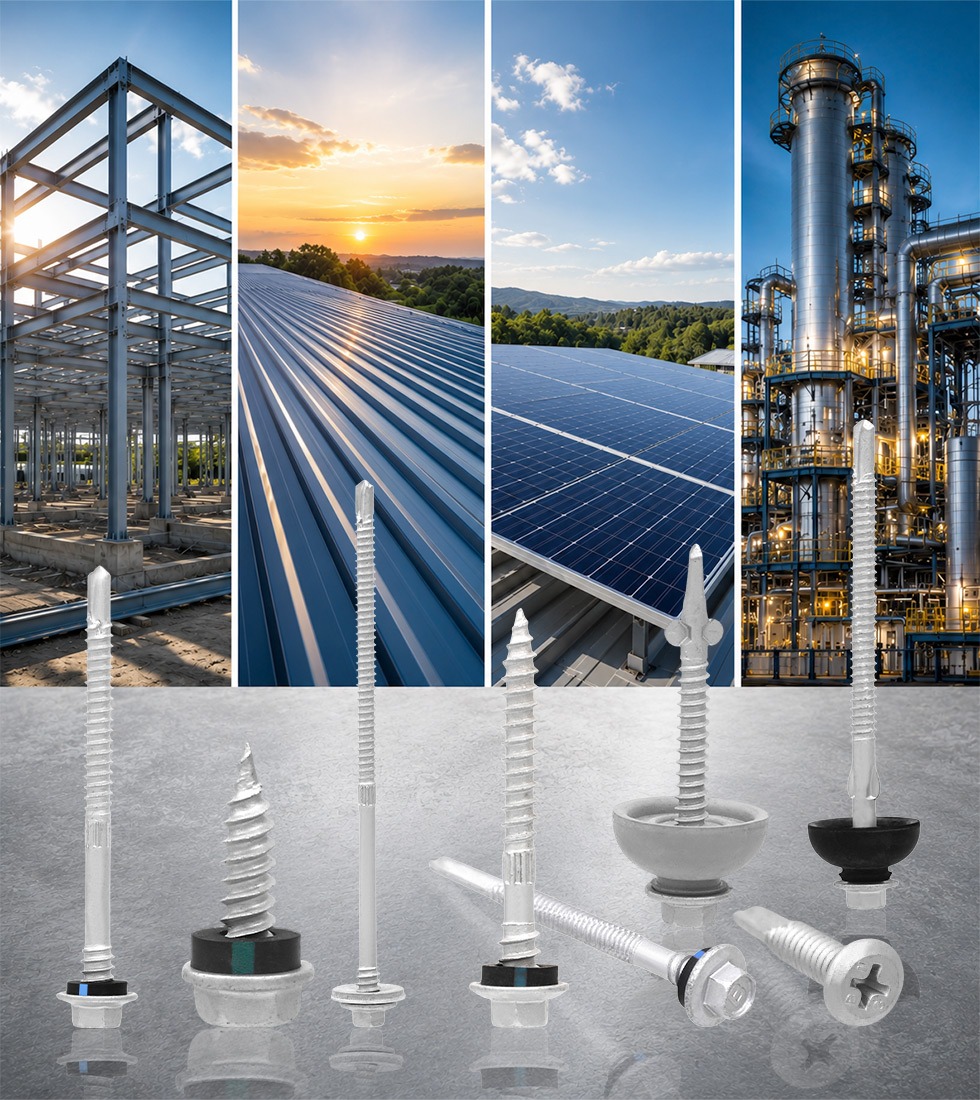
Fastener selection should consider more than size. The standard, corrosion classification, testing, screw design, substrate, and installation method all contribute to the suitability of the connection.
Boltex® Fasteners manufactures AS3566 Class 3 Screws for roofing, cladding, framing, and related construction applications. Our Class 3 screws are tested for the applicable requirements, including 1,000 hours of salt-spray performance.
Need AS3566 Class 3 roofing screws for your construction application? Contact Boltex® Fasteners to discuss the appropriate screw configuration for your project.
Frequently Asked Questions
Key technical and engineering queries answered for this fastening system.
Boltex®Fasteners
Boltex® Fasteners delivers precision-engineered roofing screws, cyclone washers, and advanced fastening systems trusted across industrial PEB structures and construction projects.
Related Technical Articles
View All GuidesNeed Project-Specific Fastening Assistance?
Our technical application team assists PEB builders, roofing contractors, and solar EPC firms with pull-out calculations, wind-load tests, and customized fastener coating recommendations.